

Rug moth treatment in Toronto
Moths are drawn to wool rugs, especially in dark, quiet corners. Our rug moth treatment starts at our facility: we clean affected rugs, report what we find, and help prevent new moths.
Signs to look for
Signs of moths in a rug
The damage is done by the larvae, not the moths.
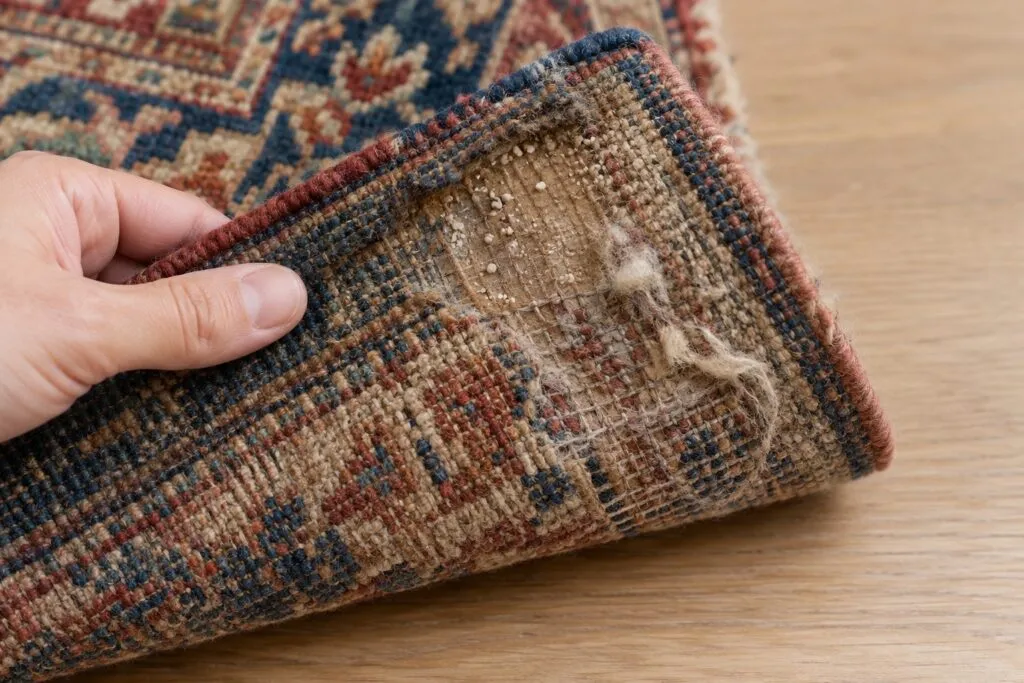
Moth larvae feed on wool and silk. They like dark, undisturbed spots: under sofas and beds, along walls and on the back of the rug.
- Bare patches
- Loose tufts
- Fine webbing
- Gritty specks
You may also spot small, pale moths nearby. Check the back of the rug and the parts under furniture. That’s where moths often start.
What we do
How we deal with moths
Front and back first, then a thorough wash.
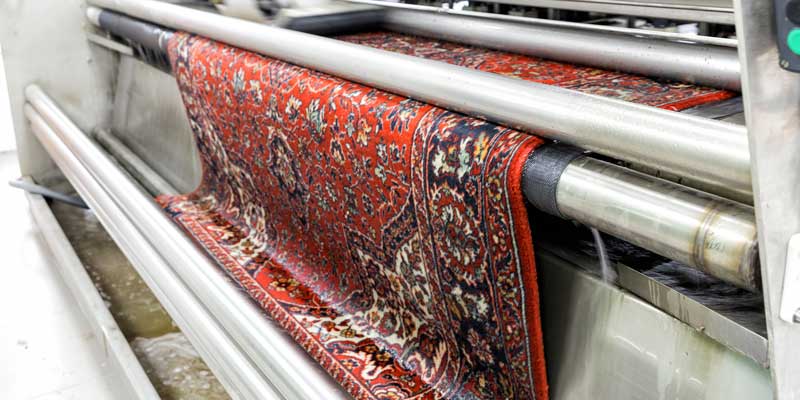
First we look over the whole rug, front and back, to see where moths have been and whether there’s damage. Then we wash it thoroughly at our facility, which helps clear out larvae, eggs and the debris they leave behind.
Ask what the moth treatment involves, and we’ll walk you through it before you decide.
Step by step
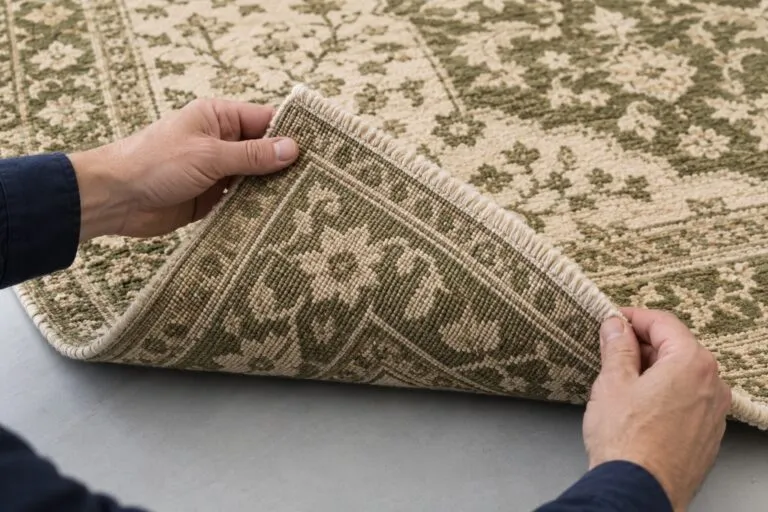
Look
The whole rug, front and back, nothing missed.
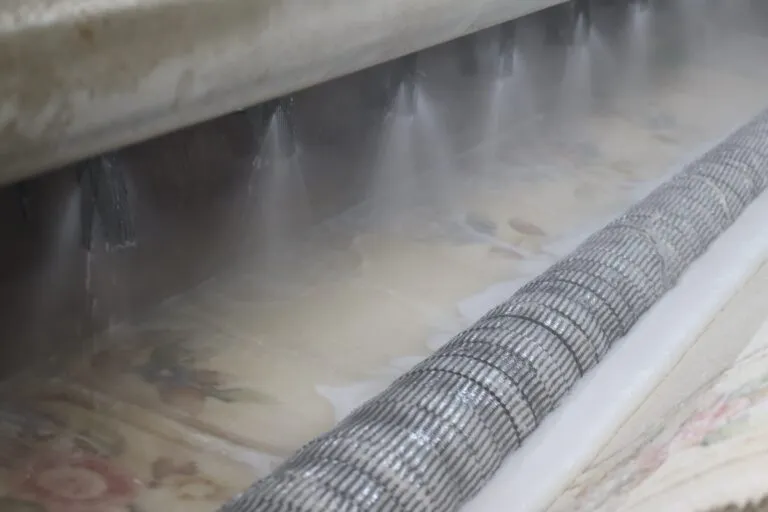
Wash
A wash to suit its fibres; hidden damage shows.
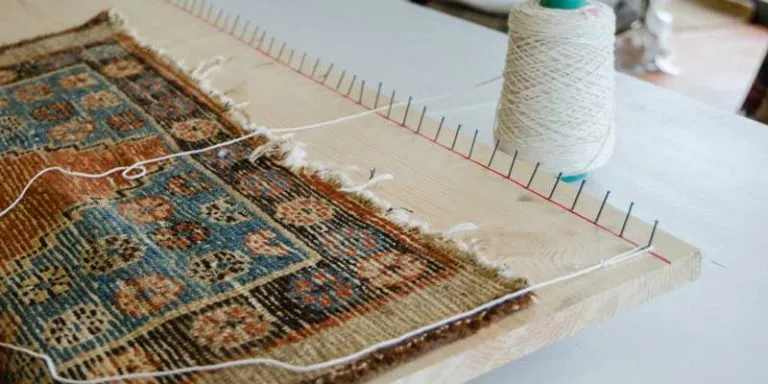
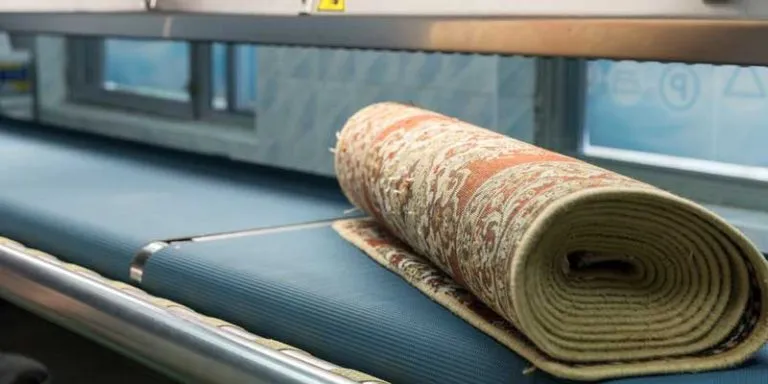
Moth treatment
Optional, and your call. Helps prevent new moths.

Storing a rug
How to store a rug safely
Moths love a quiet closet.
A rolled rug that’s left alone is just what moths like. A little care before it goes away makes a real difference.
- Have it cleaned first. Moths are drawn to dirt, spills and body oils.
- Roll it, don’t fold it. Folds can crease and crack a rug.
- Wrap it in breathable cloth, like a cotton sheet. Plastic traps damp.
- Keep it off the floor, somewhere cool and dry.
- Once a month, unroll it, look it over and vacuum it. Leave it for months on end and you may unroll a moth-eaten rug instead.

At home
Keeping moths away
Moths prefer rugs that are left alone.
A rug that’s walked on, vacuumed and moved now and then is much less inviting to moths.
- Once a month, vacuum a wool rug all over with a vacuum that has an electric brush, including under furniture and along the edges. This matters most.
- Roll it back each time and vacuum the back too.
- Turn the rug and move furniture from time to time.
- Let light and air into rooms you don’t use much.
If you’ve spotted moths in your rug, call us at (416) 939-7571 and we’ll suggest what to do.
Rug repair
When moths have left damage
Rug moth damage can sometimes be repaired, and we’ll be honest about whether it makes sense.
Questions
Rug moth questions
The questions we’re asked most often, answered the way we would on the phone.
Can moths damage a synthetic rug?
Not on its own. Moth larvae eat animal fibres: wool most of all, and also real silk, fur and felt. They can’t digest synthetic fibres of any kind, or plant fibres such as cotton, jute and viscose (also called art silk or rayon). A rug that blends in wool can still be eaten, and larvae may chew spots soiled with food or sweat. So the monthly vacuuming above is a must for wool, and optional for a synthetic rug.
Will cleaning get rid of moths for good?
Cleaning deals with what’s in your rug now. Moths can still come back from elsewhere in your home, so we can’t promise they won’t return. The habits above can help.
Should I treat the rest of my home?
If you’re seeing moths in closets or other rooms too, a pest control professional is the right person to call. We look after the rug.
Can you repair moth damage?
Sometimes. It depends on how much pile is gone and the state of the threads underneath. Reweaving, moth repair and full restoration take long, careful work, with colours and fibres matched by hand, so they’re usually done on valuable rugs, antiques and works of art. See moth damage repair, or ask us once we’ve seen your rug.
How much does rug moth treatment cost?
Cleaning is priced by the size of your rug. Moth treatment is an extra that starts only with your OK, so you pay what was agreed. Pickup and delivery are free.
Worried about moths?
Book a free pickup or call about rug moth treatment, and we’ll take a look.